

U16s: England 2-4 Italy (Val de Marne)
England men’s under-16s competed in the Val de Marne international tournament in France at the end of October. Led by head coach Neil Ryan, the Young Lions played three games over five days.
My plan was to publish a roundup of each fixture. However, Wyscout has since removed all the match footage, so for now, here's a roundup of the match against Italy, including a brief game summary and notable tactical observations, followed by snapshot notes on the individual England players.
England 2-4 Italy
Date: 27/10/26
Viewed: Video (Wyscout)
Starting Line-Ups: See image below. England in red.

England Substitutions:
63 mins:
16 Gonzales-Osbourne on for 8
21 Hitchen on for 11
73 mins:
18 Bolton on for 3
12 John-Charles on for 9
84 mins:
4 Wattley on for 5
Goals:
Note:
England (#8 Robinson) had a penalty saved in the 31st minute
Game Summary
Despite the scoreline, the total shot count was relatively low: England 9 vs Italy 11.
Each team's attempts on goal also came in clusters, with the vast majority of all shots occurring in the 1st Half and final 10-minutes, resulting in largely shot-shy 2nd Half.
Six of England's shots came between the 20th minute and half-time, including their two goals and missed penalty. Italy had five shots, including two goals, in the opening 25-minutes, and then another five in the final ten-minutes, again resulting in two goals.
One contributing factor, which impacted England at both ends of the pitch, was England's frequent mistakes and ball losses throughout the game, particularly in their build-up play.
Italy regularly threatened following England's ball losses, and capitalised upon two specific errors by England goalkeeper #1 Ellis for their first and third goals. The first followed a misplaced short pass just outside England's penalty area when trying to play out through pressure, leading to a 1v1 and close-range finish. For the third, Ellis was caught in no-man's land from a freekick, allowing Italy to score a tap-in into an empty net.
Mistakes were also at play in the sequence leading to Italy's second goal. From an Italy perspective, they worked possession from their goalkeeper through the thirds to score a well-worked team goal; from an England perspective, however, the move was littered with individual defensive lapses.
The one slight exception was Italy's fourth goal in the 90th minute which came from a breakaway following an England corner. England had committed everyone bar one outfielder inside the box in search of an equaliser, so this goal was more a result of game state.
England's repeated losses of possession during build-up not only led to defensive issues but it also contributed to stifling their own progression attempts and, in turn, limited their attacking threat.
While England had the greater share of possession overall, and in the second half more sustained possession spells in the opposition half, especially after the introduction of
#16 Gonzales-Osbourne and #21 Hitchen, they failed to convert these advantages into either high-volume or high-quality chance creation.
During England's aforementioned 25-minute spell in the 1st Half, where they created six chances, scoring two and missing a penalty, the most influential factor was the increased involvement of #9 Batista, with England playing directly into their CF during attacking transitions and from set-pieces (namely freekicks and throw-ins).
On several of these occasions, Batista successfully secured and retained possession in advanced areas. This provided England with greater platform to access to their wingers, and importantly, in more advantageous scenarios (e.g. 1v1 situations in the final 3rd), contributing to their flurry of attempts.
Additionally, this increased presence in the final 3rd enabled England to collectively push up the pitch as a team, increasing the backline's counter-press proximity, leading to a number of quick regains and, as a result, sustained attacking pressure. A virtuous cycle.
In terms of goals, England's first came from a direct pass in behind, following a succession of turnovers by both sides in the middle third, and a composed 1v1 finish from Batista. Their second came following two positive individual actions, with Batista initially displaying effective hold-up and link-up play to control a freekick into him before #11 Dore received inside the box, cut onto his right-foot to shoot and score.
Even though this game was watched through an England lens, it would be remiss not to mention the influence of Italy's intensity and effectiveness, both on and off the ball. Their well-drilled midfield-diamond and two-striker system not only complimented their counterattack and direct style of play, but also contributed to disrupting England's attacking gameplan.
Tactical Observations
Both teams set up in similar systems and showcased similar intentions to those observed in the two nations' double-header at the end of August. Recap here →
In possession, England intended to:
Build-up from deep, using their goalkeeper, back four and double pivot to attract opposition pressure (forward and midfield lines) through circulation, with the aim of isolating their forward line against Italy's backline.
Play into their forward line, this was another tactic used to attract pressure and destabilise the Italy backline, and, in turn, create space in advanced areas to attack quickly through countermovements, give-and-gos and third-player combinations.
Create chances from wide areas in the final 3rd by utilising their wingers' speed and 1v1 ability and wide combinations (overlaps and underlaps).
With Italy defending in a narrow 4-1-3-2 shape, England typically attempted to progress around the opposition in first phase build-up. This appeared to be both a deliberate tactical team intention and, at times, a route forced upon them.
There were occasional attempts to play through, but in these instances Italy’s central concentration of players generally enabled them to leverage their numerical and positional advantages to win first and second balls.

England’s most tried progression route was via their right-hand side.
RB #2 Boggan played 30% of England's total forward passes across the game, with the next highest being LB #3 Rose (16%), highlighting England's attempts to play around the opposition in build-up.
In this phase, Boggan repeatedly received the ball, usually from the goalkeeper, centre-backs or RCM, before generally attempting one of three passes:
a vertical ball into the RW's feet.
a diagonal pass inside into the AM's feet.
a clipped diagonal pass into the CF.

While this approach was not necessarily problematic, the repeatability, and therefore predictability, of these build-up patterns made it easier for Italy to anticipate and, in turn, disrupt and deny England's progression attempts.
This was further compounded by England's tendency to lose possession throughout the game, particularly in their own defensive 3rd, with potential attacks often stopping before even getting started.
In all three of Boggan's highlighted pass scenarios, the target England forward typically received under immediate back-pressure from an Italy opponent, testing their technical ability and physicality to secure possession. This was an aspect AM #20 Hall, in particular, consistently struggled with.
England did find more joy from Boggan playing into #9 Batista. However, as mentioned in the Game Summary, while the England CF, at times, had success in securing and retaining possession in these instances, it was still a pass into a player under immediate back-pressure, so it continued to allow Italy's defenders to anticipate and defend facing-forward, increasing their chances of disrupting and denying England's progression attempts, which Italy LCB #6 Appiah increasingly did.
Another related aspect which made England's build-up easier to anticipate and defend was a lack of runs and direct passes in behind the Italy backline, even if just for attacking variety and decoy purposes.
In the 1st Half especially, there were multiple missed opportunities to be more direct and play over the opposition into the space behind. This was despite Italy's high defensive line during England's build-up phases and their LCB often jumping out of the backline to track England's AM, thereby creating a potential gap to exploit.

There were, granted, a couple of unsuccessful long pass attempts by Boggan to play over the Italy backline throughout the game, with RW #7 Fuala's opposite runs into the channel the target. However, these appeared to be more the exception than the rule.
At times, England's lack of runs and direct passes in behind the Italy backline appeared largely down to a lack of shared intent amongst the players to exploit these open spaces directly during build-up phases.
England's tendency (and therefore perceived preference) was to first play into the forward line, rather than directly beyond it, with fullbacks more attuned to playing into feet and the forward line more attuned to receiving into feet.
The intention appeared to be to first try and draw an opponent out of the backline before then playing beyond into the vacated space using countermovements e.g. one drops short, one goes long.
However, England's forward line more often than not failed to exploit these opportunities, struggling to execute any subsequent penetrating action from balls into them e.g. a give-and-go or third-player combination, often due to the immediacy and effectiveness of opposition pressure impacting their affordances and technical ability.
In contrast, during attacking transitions, when the England forward line had more opportunities (and space) to receive, turn and play forward, England experienced more joy, often threatening through box entries and crosses, although the end product was typically lacking.
Here are some examples of all of this in practice.
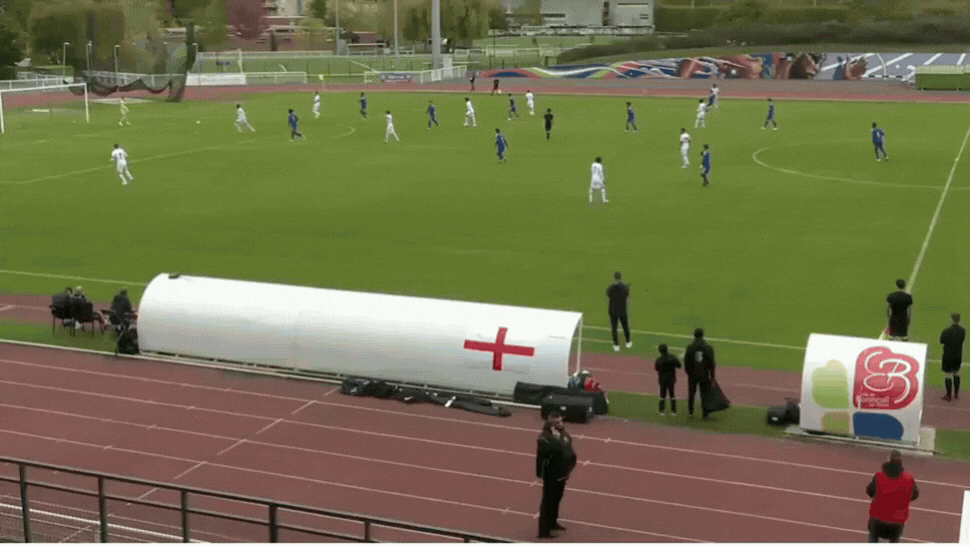


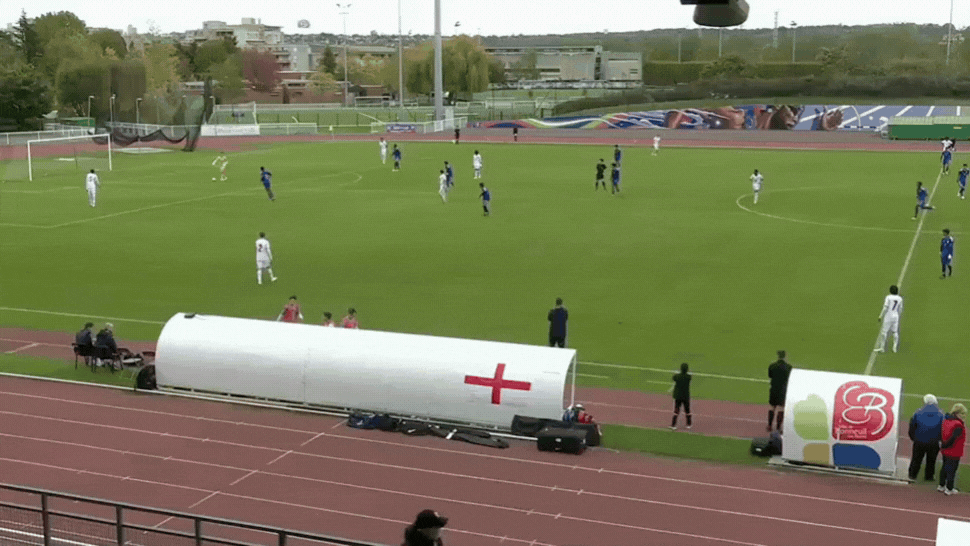
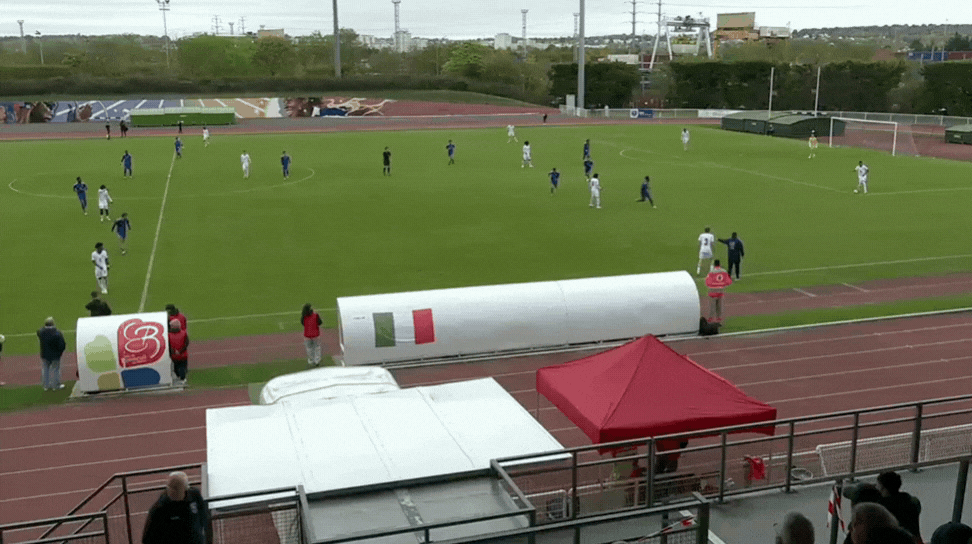
At the start of the 2nd Half, England began directing more of their deep build-ups via their left-hand side, but LB #3 Rose, like in the 1st Half, was culpable for multiple ball losses, so therefore Italy had the early momentum.
As the half progressed, a similar story to the 1st Half prevailed and then Italy's engagement line and block gradually began to drop deeper. As a result, while England were afforded more territory, it generally resulted in them circulating possession from side-to-side in the opposition half without actually threatening the Italy goal (3 shots in the second half, two of which came in stoppage time).
Player Observations
This section details snapshot observations on every England U16 who featured against Italy.
For reference, match footage was removed before I was able to rewatch noted actions so therefore this section is more streamlined than usual.
While focus was on England, one opposition player who particularly caught the eye was #9 Mark Cordopatri who consistently displayed a couple of clever touches and effective hold-up and link-up play.
GK #1 Mason Ellis
Minimal goalkeepering observations. Primarily circulated possession in the backline during build-up, with short passes to the CBs and FBs.
Culpulable for Italy's first (misplaced pass in risky scenario) and third (positioning and decision-making) goals. Made a number of questionnable decisions in possession, attempting to play out when risk > reward, but clearly under tactical instruction to play through pressure.
RB #2 Francis Boggan
Captain. Witnessed providing instructions and encouragement to teammates during stoppages throughout.
Instrumental in England's build-up. Appeared to be following tactical instruction with majority of pass selections, but typically executed with quality (accuracy and weight of pass). Could have benefitted from adjusting positioning and body orientation (play and look forward on his first-touch) at times, as had a tendency to control and then open up before passing forward, wasting valuable milliseconds.
Supported attacks in the final 3rd with recycle option below the ball and overlapping and underlapping runs beyond the ball. Won a number of his defensive and aerial duels, plus interceptions in the defensive 3rd.
LB #3 Edward Rose
Culpable for multiple ball losses, both unforced and when under pressure. Won a number of his wide defensive duels.
RCB #5 David Odunukan
Won a number of backline regains during high pressure phases and counterpress moments.
Primarily circulated possession in the backline during build-up, with short passes to his CB partner and wide to the RB. Guilty of a few slack passes. In the 2nd Half, during possession spells in the opposition half, demonstrated ability to play short, progressive passes under pressure.
LCB #15 Miloh Kapotwe
Won a number of backline regains during high pressure phases and counterpress moments. Showcased some hesistancy and dominance in contested duels during the 1st Half. Displayed effective box defending in 76th min, blocking the initial cutback before quickly resetting to anticipate and intercept a cutback.
Primarily circulated possession in the backline during build-up, with short passes to his CB partner and wide to the LB. Rarely attempted to be progressive (although, team intention to play around). Guilty of a few slack passes.
CM #6 Concilio Tonebi
Played LCM 1st Half before switching to RCM 2nd Half and then LB following the 63 min subs.
Primarily circulated possession in build-up. Rarely attempted to be progressive but England also tended to skip midfield, preferring to play around the opposition so limited opportunities to perform actions.
CM #8 Charlie Robinson
Played RCM 1st Half before switching to LCM 2nd Half.
Primarily circulated possession in build-up. Rarely attempted to be progressive but England also tended to skip midfield, preferring to play around the opposition so limited opportunities to perform actions.
Played box-to-box. Consistently attempted to get up and support the forward line with runs and passing options. Assisted England's first goal, regaining possession before a carry and a weighted through ball in-behind the Italy defensive line.
AM #20 Eli Hall
Struggled to secure possession in the pockets when receiving to feet with back-pressure. Minimal involvements.
RW #7 Nathan Fuala
Played RW for the majority of his minutes. Moved to LW after the 73 min subs.
More effective when receiving in space, facing the opposition goal. Showcased 1v1 abilty in the final 3rd, typically utilising pace to bypass opponents, including winning England's penalty. Attempted to attack on both the inside and outside.
Struggled to link play when receiving to feet under back-pressure during build-up, although, he tended to win a number of throw-ins when locked-in wide, maintaining team possession and gaining territory.
Displayed countermovement awareness, although separation movement, in terms of disguise and changes in tempo, could be a development area (need a rewatch as based off a few notes from my first watch).
LW #11 Jaice Dore
Played LW for the majority of his minutes. Moved to CF after the 73 min subs.
Scored England's second goal, showcasing 1v1 ability before cutting onto right foot and accurate and powerful shot into the far bottom corner.
Limited attacking involvements overall, due to England's right-hand side bias in possession. When he was found in the final 3rd it frequently led to box entries, although end product was mixed. Attempted to attack on both the inside and outside.
CF #9 Ivanildo Batista
Scored England's first goal, showcasing intelligent movement in-behind and to cut across the defenders running path before a composed side-foot finish when 1v1.
Involved in all of England's most threatening attacks. Created own chance in 2nd Half from a diagonal dribble from the wing but shot was high and wide. Robust and able to withstand physical pressure on the dribble. Ran channels.
Displayed moments of effective hold-up and link-up, securing possession under pressure before finding a pass. Although, equally also lost his fair share of duels to the Italy CBs.
#21 Zach Hitchen
Subbed on at 63 mins. Played AM role. While guilty of a few ball losses they were mainly a result of trying to be positive and play forward. Some tidy invovlements, receiving and combing in pockets during cameo.
#16 Isaiah Gonzales-Osbourne
Subbed on at 63 mins. Played CM role. Showed composure receiving and playing forward in congested central areas, including some line-breaking passes.
#18 Jaylen Bolton
Subbed on at 73 mins. Played CM role. Miminal notes due to minimal minutes.
#12 Lewis John-Charles
Subbed on at 73 mins. Played RW role. Miminal notes due to minimal minutes.
#4 Zac Wattley
Subbed on at 84 mins. Played RCB role. Miminal notes due to minimal minutes.
Thank you for reading. If England's U16s Val de Marne games against Japan and France become available once again on Wyscout, an updated post will be published.

Comments